Six - Leaf Rossette
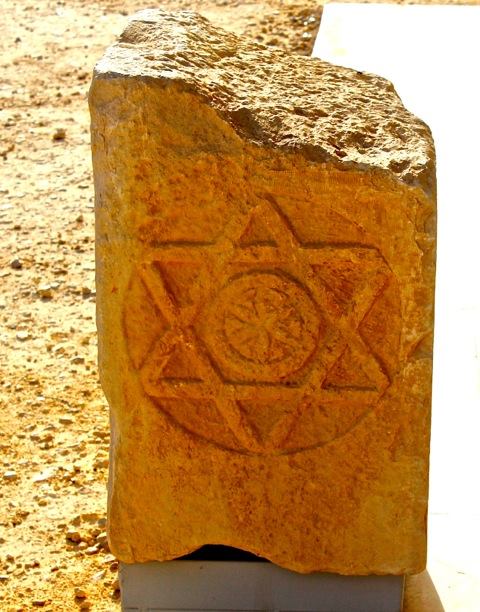
(The six-leaf rosette inside of the Star of David found on a lintel at Tel es-Simadi)
One of the most basic and common ancient icons in Israel is the six-leaf rosette. Many consider it popular Jewish artwork because it appears in numerous mosaics, carvings, and lintels. Contrary to popular belief it is not just artwork, it is an icon. The six-leaf rosette is an iconic symbol denoting great significance.
The six-leaf rosette is the icon of the House of David. David was the greatest king in Israel’s history. In spite of his indiscretions, he was known as a man after God’s own heart (Acts 13:22). Although some dispute David’s priestly heritage, the Bible is clear that he entered into the Temple, ate the Showbread, and offered sacrifices. (I Samuel 21:7, Matthew 12:1-8, II Samuel 6:12-14). The icon signifies all the ideas of David’s character and heritage. It is the root from which comes the six-sided Star of David. Today, the Star of David has come to be generally recognized as a symbol of Jewish identity.
The six-leaf rosette is the icon of the House of David. David was the greatest king in Israel’s history. In spite of his indiscretions, he was known as a man after God’s own heart (Acts 13:22). Although some dispute David’s priestly heritage, the Bible is clear that he entered into the Temple, ate the Showbread, and offered sacrifices. (I Samuel 21:7, Matthew 12:1-8, II Samuel 6:12-14). The icon signifies all the ideas of David’s character and heritage. It is the root from which comes the six-sided Star of David. Today, the Star of David has come to be generally recognized as a symbol of Jewish identity.
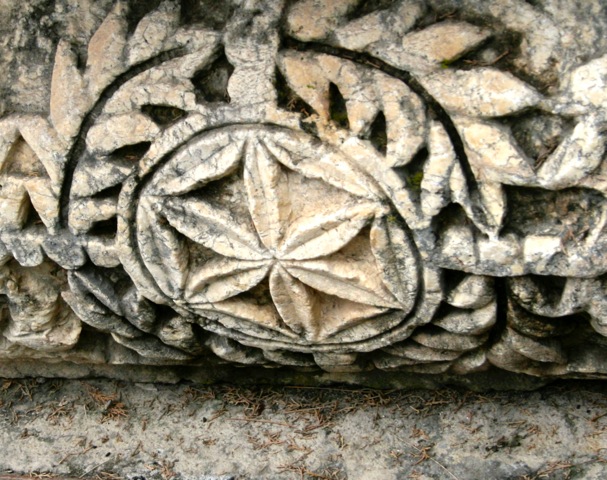
So how did the six-leaf rosette become the icon of the House of David? Icons were generally chosen because they represented a unique element of a geographical area or structure. David was distinguished from the rest of his family because he grew up in Bethlehem Ephrata. His father, Jesse, and his seven brothers lived in the city of Bethlehem. The city of Bethlehem is in a different location than Bethlehem Ephrata. The Hebrew word Ephrata means fruit or produce. Bethlehem Ephrata was the village of fruit or produce. This means it was the farm community for the city of Bethlehem.
An illustration of the difference between the city of Bethlehem and the farm community of Bethlehem Ephrata is seen in the story of Ruth and Boaz. Boaz lived in the city of Bethlehem but his business was in Bethlehem Ephrata. His fields lay just outside of the farm community of Bethlehem Ephrata. He threshed his grain at the threshing floor in Bethlehem Ephrata. Ruth 3:15 says the morning after Ruth slept at his feet on the threshing floor, Boaz went up into the city.[1] It is clear from the text in Ruth that the city of Bethlehem and Bethlehem Ephrata are two different places.
Yalkut HaMachiri records that when Jesse was older, he chose to put away his wife, Nitzevet. He sent her to live at the Tower of the Flock in Bethlehem Ephrata down the hill from the city of Bethlehem. Jesse got lonely after he put away his wife so one night he went down to the Tower of the Flock and visited her. That night she became pregnant with David. David lived at the Tower of Flock in Bethlehem Ephrata with his mother while his father and seven brothers lived in the city of Bethlehem.
[1] Some English texts say, “she went up into the city” rather than “he went up into the city.” This is a misprint in some of the early King James Bibles. The Hebrew text reads that “he” (Boaz) went up into the city.
Luke 2:4 calls the Bethlehem where Christ was born “the City of David.” Why? Because David lived in the farm community of Bethlehem Ephrata. He lived in the Tower of the Flock (Ha Migdol Eder). Jesus was born at the Tower of the Flock in Bethlehem Ephrata as well. (Micah 4:8-5:2).
An illustration of the difference between the city of Bethlehem and the farm community of Bethlehem Ephrata is seen in the story of Ruth and Boaz. Boaz lived in the city of Bethlehem but his business was in Bethlehem Ephrata. His fields lay just outside of the farm community of Bethlehem Ephrata. He threshed his grain at the threshing floor in Bethlehem Ephrata. Ruth 3:15 says the morning after Ruth slept at his feet on the threshing floor, Boaz went up into the city.[1] It is clear from the text in Ruth that the city of Bethlehem and Bethlehem Ephrata are two different places.
Yalkut HaMachiri records that when Jesse was older, he chose to put away his wife, Nitzevet. He sent her to live at the Tower of the Flock in Bethlehem Ephrata down the hill from the city of Bethlehem. Jesse got lonely after he put away his wife so one night he went down to the Tower of the Flock and visited her. That night she became pregnant with David. David lived at the Tower of Flock in Bethlehem Ephrata with his mother while his father and seven brothers lived in the city of Bethlehem.
[1] Some English texts say, “she went up into the city” rather than “he went up into the city.” This is a misprint in some of the early King James Bibles. The Hebrew text reads that “he” (Boaz) went up into the city.
Luke 2:4 calls the Bethlehem where Christ was born “the City of David.” Why? Because David lived in the farm community of Bethlehem Ephrata. He lived in the Tower of the Flock (Ha Migdol Eder). Jesus was born at the Tower of the Flock in Bethlehem Ephrata as well. (Micah 4:8-5:2).
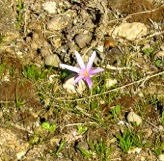
One of the distinguishing features of Bethlehem Ephrata is the crocus flower that grows naturally there. This crocus flower is a small, purple, six-leafed flower with a yellow stigma. Saffron is a spice that is made from the yellow stigma of the flower. This Saffron is required for anointing the sacrificial lambs at the Temple. When a person would take a lamb to the Temple for sacrifice, he would have it sheared by the pool of Bethesda then have it washed in the pool. Next the lamb would be sprinkled with this yellow saffron in preparation for sacrifice. This crocus flower was so incredibly important in Israel that during ancient times it became known as the icon of the House of David because these flowers grew naturally in Bethlehem Ephrata.
© Dr. Steven L Smith 2016
© Dr. Steven L Smith 2016